
Lyn Hejinian (1941-2024)
PennSound: featuring LINEbreak interview
EPC author page
Paris Review tribute
Lytle Shaw obit at Jacket2
Ryan Ruby in The Nation
New York Times obit
[photo by Charles Bernstein]
•••

Marjorie Perloff (1931-2024)
EPC page
University of Chicago obit
Jacket2 celebration
New York Times obit
Beautiful Enemies (Pablo Helguara)
Stanford obit
••••

Neeli Cherkovski (1945-2024)
New York Times obit
PennSound page
(photo: Kyle Harvey)
••••
Digital Libary
first stop for EPC resources
Larry Eigner's On My Eyes (Jargon, 1960)
& Matrix –– "Again Dawn" displayed on the surface of the Berkeley Art Museum (1993)
++ @ Eigner page
Yitzhak Katzenelson, Dos Lid Funem Oysgehargen Yidishn Folk / The Song of the Massacred Jewish People. tr. Jack Hirschman (1945/2012): pdf
O Books anthologies edited by Leslie Scalapino
(some with Judith Goldmith)
Ron SIlliman: Complete Blog History
(topic headings for all blog entries 2000-2020
Author Pages
: Mina Loy and Bill Keith
Poetry in the Making: A Bibliography of Publications by Graduate Students in the Poetics Program, University at Buffalo, 1991-2016, by James Maynard, first issue of Among the Neighbors (2017): pdf
Vincent Broqua and Dirk Weissmann , eds.
Sound /Writing: traduire-écrire le son et le sens homophonic translation – traducson – Oberflächenübersetzung
Editions des Archives Contemporaines (2019)
EPC Digital Edition of Artifice of Absorption
Tom Raworth's NOTES (mirror)
If you have a broken link to an EPC resources, use the top tabs (e.g. author pages & digital library, etc.), fill in the custom search bar at the foot of this page or, for a known URL, substitute "writing.upenn.edu/epc/" for "epc.buffalo.edu/" in the address bar above.
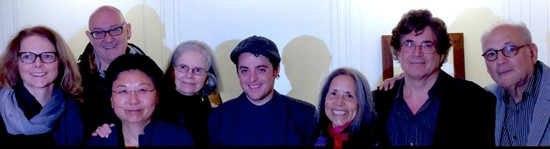
Willis, cheek, Kim, Retallack, Snelson, Vicuna, Glazier, Bernstein at EPC@20